MedPark Fissure Surgery Hospital in Mohali
Pain while passing stool can be uncomfortable, but when the pain keeps returning or continues for a long time, it should not be ignored. A sharp sensation during bowel movements, burning afterwards, or a small amount of blood on the toilet paper can sometimes be caused by an anal fissure.
An anal fissure is a small tear in the
delicate lining of the anal canal. It can develop after passing a hard stool,
repeated constipation, or excessive straining. Many fissures heal with
appropriate non-surgical treatment. However, some become persistent and may
require a surgical procedure.
For people searching for a fissure surgery hospital in Mohali, understanding the condition and available
treatment options can make it easier to seek appropriate medical care. MedPark
Hospital, Mohali, provides evaluation and surgical treatment for patients with
persistent anorectal problems.
What Is an Anal Fissure?
An anal fissure is a small tear in the
tissue around the anal opening. It can occur when the tissue is stretched or
injured during a bowel movement.
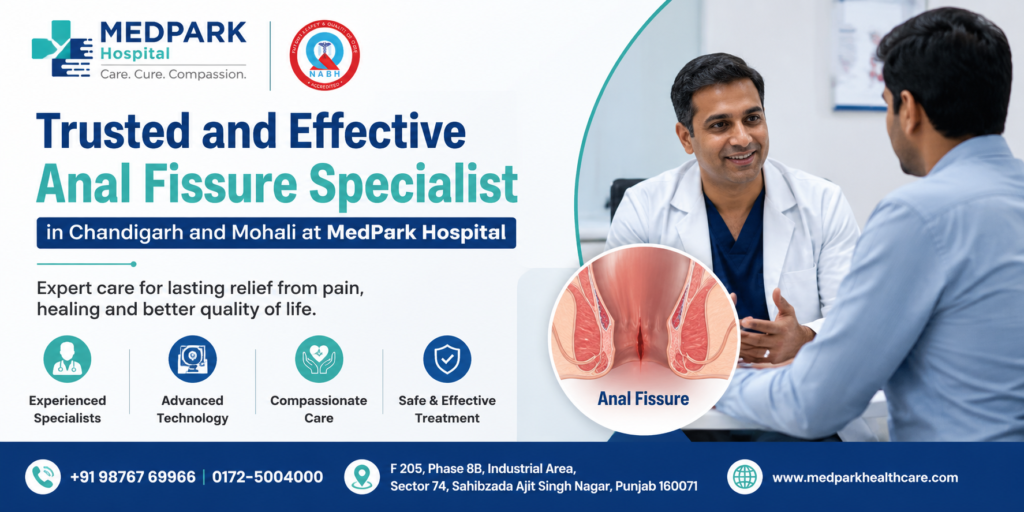
Although an anal fissure is not
usually a serious condition, the pain can be significant. Some patients begin
avoiding bowel movements because they expect them to hurt, which can worsen
constipation and create a cycle of pain and hard stools.
What Can Cause an Anal Fissure?
Several factors can contribute to the
development of a fissure.
Constipation and Hard Stools
Passing a large or hard stool can
stretch the anal canal and cause a small tear. If constipation continues,
repeated bowel movements may prevent the area from healing properly.
Straining
Pushing forcefully during bowel
movements increases pressure around the anal canal. Repeated straining can
contribute to both the development and persistence of a fissure.
Frequent Loose Motions
Fissures are not only associated with
constipation. Frequent diarrhoea can also irritate the tissue around the anus
and may contribute to fissure formation.
Childbirth
Some women experience anorectal
problems after childbirth. Changes in pressure and strain around the pelvic
region during delivery may contribute to the development of an anal fissure.
Certain Medical Conditions
In some cases, recurrent or unusual
fissures can be associated with underlying gastrointestinal or inflammatory
conditions. If a fissure does not behave like a typical fissure, the doctor may
recommend additional evaluation.
Symptoms You Should Know
Pain is usually the most noticeable
symptom.
A person with an anal fissure may
experience:
●
Sharp pain while passing stool
●
Burning or irritation after
bowel movements
●
Bright red blood on toilet
paper or the surface of stool
●
Itching around the anal area
●
Tenderness near the anal
opening
●
A visible crack or wound
●
A small skin tag in some
long-standing cases
The duration and intensity of pain can
differ. Some people experience discomfort only while passing stool, while
others may continue to feel pain for some time afterwards.
Since piles, fistula, abscesses, and
other anorectal conditions can produce similar symptoms, self-diagnosis is not
advisable.
Does Every Fissure Require Surgery?
No. Surgery is not the first treatment
for every patient with an anal fissure.
A newly developed fissure may improve
with measures designed to reduce constipation and allow the injured tissue to
heal. Depending on the patient's condition, the doctor may recommend dietary
fibre, adequate fluid intake, stool-softening measures, medicines, and other
conservative treatments.
However, a fissure that remains
painful despite appropriate treatment may require further intervention.
Surgery may be discussed when the
fissure has become chronic, keeps returning, or has not responded adequately to
non-surgical treatment.
The decision is based on the patient's
symptoms, examination findings, medical history, and previous treatment.
Fissure Surgery Hospital in Mohali
For patients looking for a fissure
surgery hospital in Mohali, MedPark Hospital offers consultation and
surgical care for persistent fissure-related problems.
The treatment process starts with
understanding the patient's symptoms. The surgeon may ask about bowel habits,
constipation, bleeding, pain, previous treatments, and how long the symptoms
have been present.
A physical examination may be
performed to confirm the diagnosis. In certain situations, additional
investigations may be required to rule out other causes of anal pain or
bleeding.
If surgery is considered appropriate,
the doctor explains the recommended procedure, preparation, recovery, and
possible risks before treatment.
How Is Fissure Surgery Performed?
The surgical technique depends on the
individual patient's condition.
One established procedure used for
selected patients with chronic anal fissure is lateral internal
sphincterotomy. In this procedure, a controlled portion of the internal
anal sphincter is released to reduce excessive muscle pressure around the
fissure.
Reducing this pressure can allow
improved blood flow to the affected area and support healing.
The procedure is not suitable for
every patient. The surgeon considers factors such as the patient's medical
history, previous anorectal procedures, symptoms, and risk of
continence-related complications before recommending surgery.
Other treatment approaches may also be
considered depending on the patient's condition.
What Happens Before Surgery?
Before undergoing a procedure,
patients generally have a pre-operative assessment.
The medical team may review:
●
Existing medical conditions
●
Previous surgeries
●
Current medicines
●
Allergies
●
Previous anaesthesia-related
problems
●
Blood test results when
required
●
Bowel-related symptoms
●
Previous treatments for the
fissure
Patients should tell the doctor about
all medicines they take, including blood-thinning medication and supplements.
Specific instructions regarding
eating, drinking, medicines, and preparation for the procedure will depend on
the planned treatment.
Recovery After Fissure Surgery
Recovery is different for every
patient.
Some discomfort can be expected after
surgery, particularly around bowel movements during the early recovery period.
The doctor may prescribe medication to help manage pain and support healing.
Keeping stools soft is an important
part of recovery. Patients may be advised to consume adequate fibre and fluids
and, when required, use medicines recommended by their doctor to prevent hard
stools.
Good personal hygiene is also
important. Patients should follow the surgeon's instructions regarding cleaning
and care of the treated area.
A follow-up appointment may be
scheduled to check healing and address any concerns.
Can Fissures Be Prevented?
There is no guaranteed way to prevent
every anal fissure, but healthy bowel habits may reduce the risk.
Some useful measures include:
●
Include fibre-rich foods in
your regular diet
●
Drink adequate fluids
●
Avoid unnecessary straining
●
Do not regularly delay the urge
to pass stool
●
Stay physically active
●
Address constipation early
●
Follow medical advice if you
frequently experience bowel problems
These measures are useful for
maintaining healthy bowel habits but cannot replace medical treatment when a
chronic fissure requires intervention.
When Should You See a Doctor?
Do not assume that every episode of
anal pain or bleeding is caused by a fissure.
A medical consultation is advisable
when pain continues, bleeding repeatedly occurs, symptoms interfere with daily
life, or the problem does not improve with basic measures.
A doctor can distinguish a fissure
from other conditions that may cause similar symptoms, including haemorrhoids,
fistula, infection, or an abscess.
Seek urgent medical attention if anal
pain is accompanied by fever, significant swelling, pus discharge, severe
tenderness, or rapidly worsening symptoms.
Why Choose MedPark Hospital, Mohali?
Finding the right hospital for
anorectal surgery involves more than simply choosing a location. Proper
diagnosis, experienced surgical care, appropriate facilities, and
post-operative monitoring are all important parts of treatment.
At MedPark Hospital, Mohali, patients
with persistent fissure symptoms can receive an evaluation to determine the
cause of their discomfort and discuss suitable treatment options.
The treatment plan is based on the
patient's individual condition rather than assuming that surgery is necessary
for everyone.
Consult MedPark Hospital for Fissure Treatment
An anal fissure may begin as a small
tear, but persistent pain can have a noticeable effect on everyday life.
Repeatedly ignoring symptoms may also delay the diagnosis of another anorectal
condition.
If you are experiencing ongoing pain,
bleeding, or discomfort during bowel movements, consider consulting a qualified
surgeon for an appropriate evaluation.
For patients searching for a fissure
surgery hospital in Mohali, MedPark Hospital provides consultation and
surgical care for persistent fissure conditions.


Comments
Post a Comment